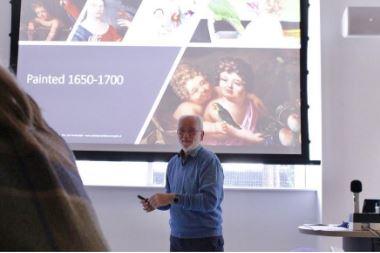
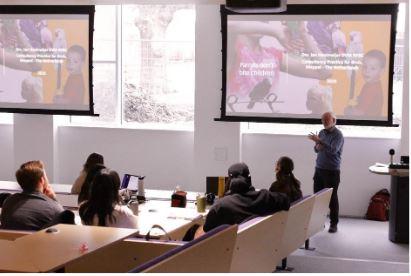
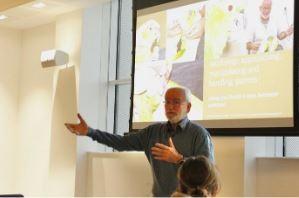
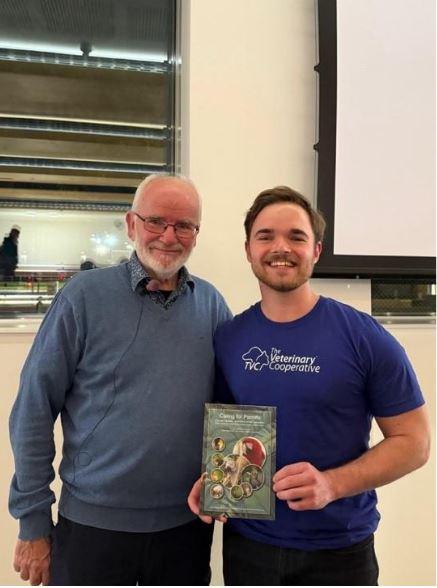
Following a seminar for veterinary students at Royal Veterinary College, University of London, student Vanesse wrote a glowing review.
Disney princesses have a well-known talent: summoning birds. We have all watched it with admiration at some point and wondered: how do I do that?
Let's be honest we all want to be the chosen one whether it involves winning over a friend's cat or baby. This isn't about fairytale charm it's about the study of behavior and cognition a crucial field for the bond between humans and animals and animal welfare. Despite being a rapidly growing field, there are still many misconceptions about it.
When we met Dr. Jan Hooimeijer, avian veterinarian recognized parrot behaviorist and international speaker the RVC Zoological Society immediately organized a seminar. Finally, we learned the secret behind those Disney princesses directly from the ornithologist himself.
The Misconception About Respect
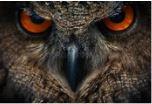
Humans, like many predators (dogs, cats, owls, and others) have eyes that are directed forward. We look animals in the eyes with so much love but for a parrot that look of love is not exactly charming. Although many people keep parrots as pets, such as macaws and cockatiels, they are not domesticated. Their instinct still views us as predators, and the fear begins at the very first encounter. So, if you cheerfully call out Who's a Good Boy? and bar your teeth, the parrot thinks: The monster wants to eat me. Think of a scene from Zootopia 2: a friendly smile (with bared teeth) from a deer can be interpreted by a badger as aggression. In bird etiquette, direct eye contact is not polite but intimidating.
Even the classic trick of luring parrots with a nut to stand on your shoulders can be a form of disrespect! For a parrot with a sharp mind it is a transparent form of bribery and an underestimation of their intelligence. Research by cognitive psychologist Dr. Irene Pepperberg has shown that parrots have the intelligence of a 6- to 7-year-old child and are capable of understanding words and concepts. Moreover the ability of parrots to learn human speech is comparable to that of 2- to 3-year-old children.
The 5-Step Dutch Behavior Protocol
The secret to a parrot's heart lies not in a bag of candy, but in mutual respect and trust. This also applies to other animals and children. Here is the ethologically substantiated five-step behavior protocol developed by the Dutch founder Dr. Jan Hooimeijer. This manual utilizes the observational skills and cognitive abilities of parrots to influence our stance and attitude, making them feel comfortable and stress-free in our presence and fostering mutual respect and trust.
Step 1: The ultimate step to show respect
- No eye contact. Do not approach the parrot directly. Place him to the side; being in the spotlight only makes him insecure and stressed!
- Be content with the parrot's presence, as if he is simply part of the sky. A non-intimidating posture, a shoulder turned slightly towards you, shows that you have no negative intentions.
- Next, play with your pen, toy, or towel. You are the interesting stranger in the café, quietly fidgeting. Do not be the attention-seeker who talks too much. Curiosity will eventually win out. They will observe you from a safe distance.
- Congratulations, you have won their genuine interest, and that is exactly the desired behavior we are looking for.
Step 2: Reward desired behavior
Now you can acknowledge them. Sit next to them, not across from them (you don't want to come across as intimidating), and cheerfully tell them that they are the most beautiful and smartest bird in the world. You celebrate and reward their choice to notice you.
Step 3: Stimulate their intelligence
Parrots love to learn by observing. Respect their intelligence by describing your surroundings. Describe your towel and toys: 'It is red and soft.' Describe them: 'Wow, your wings are so beautiful. It is blue and yellow!' 'This is your left foot, right foot.' Research shows that they understand categories such as colors, materials, shapes, and concepts such as big and small, the concept of zero, and more. So talk about what you see and let them observe you again as a role model.
Step 4: Sharing
- Reward their curiosity by sharing the object of their attention. Offer it gently and let them choose for themselves whether they want to touch it or not. Do not force them to interact, because giving orders is disrespectful. Or simply extend your arm and say: 'You may step on my hand.' And when they do, praise them softly: 'Well done! You are so brave!'
- And always remember: avoid direct eye contact. Keep them by your side and turn your body away. The same approach is also used with autistic children. Trust speaks the same language, whether with animals or with people.
Step 5: Putting respect and trust into practice
Now that mutual trust and respect have been established, the fear has disappeared. So, when it is time to trim nails or beak, or take a blood sample, the parrot is happy to cooperate. Use the same familiar towel to wrap them gently. They trust the towel and you because of the short 2-5 minutes you used to build trust first. Parrots are social animals; it is their instinct to cooperate if you first show them respect and trust. What if they are still afraid? Then just go back to step 1 until trust has been built. It is perfectly normal to repeat steps 1-3 a few times before you are ready for steps 4 and 5. It takes less than 10 seconds to go through steps 1-3 again. The key is not to show your intentions for a specific result. Don't try too hard and don't show distrust. These are often the main causes of failure.
Deciphering Parrot Behavior: The 5 Behavioral Types
Our attitude, mindset, and way of thinking determine how a parrot, or any animal for that matter, reacts to us. Too often, misunderstandings lead to unintended negative consequences. But there is hope. Dr. Hooimeijer has defined 5 behavioral types that offer us a clear framework for interpreting parrot behavior and responding to it in the right way. When we learn how to show respect and trust, they give it back. Understanding parrot behavior has never been so accessible.
Do you know which behavioral types these are?
Normal Behavior
- Normal behavior is typical behavior exhibited by an individual or a species. Behavior that is not intended to gain attention, receive a reward, or cause a problem. Examples include eating, preening, drinking, perching, and playing. A macaw scratching wooden furniture or a puppy tearing up your shoe is often not mischief, but instinctive and completely normal. You might not like it, but it is still normal behavior.
- Punishing normal behavior sends a confusing message: "It is wrong to be yourself." This creates insecurity. On the other hand, rewarding normal behavior can lead to animals repeating it excessively, even when this behavior is unnecessary, ultimately turning it into a problem. Therefore, do not react positively or negatively. Even a reprimand can feel like attention, which can unintentionally reinforce the behavior you are trying to discourage. This is how normal behavior turns into unwanted behavior and behavioral problems.
- So how can we protect furniture from young animals? Relocation is the solution. (more on that later).
Desired behavior
- Desired behavior is created/manipulated by a role model (this can be a caregiver, owner, or parent) who creates/stimulates the right conditions. The parrot chooses to participate, not because of a command, not for a reward, and not out of fear. For example: the caretaker fiddles with a keychain and the parrot shows interest.
- Although the parrot is not seeking a reward, rewarding desired behavior creates self-confidence and helps us show respect and build trust.
Undesirable behavior
- Undesirable behavior is intended to elicit a reaction/reward and is often intended to cause a problem. Screaming, talking, biting: this can be an attempt to attract attention or to cause trouble. Other examples include insecure behavior, such as feather plucking, and other self-mutilating and destructive behavior.
- Your worry, fear, frustration, laughter, or anger is a reward for them, which encourages them to repeat that behavior, leading to behavioral problems. Think twice next time before you laugh at your screaming parrot.
Forced behavior
- Forced behavior is the result of a command, (social) pressure, or fear of punishment. Animal training often falls into this category and almost always involves external reward or punishment. Consider, for example, starving an animal and only giving it a treat when the animal does well.
- The animal has no real choice and develops no respect. The parrot obeys but does not understand why. This type of training can become ineffective. Even seemingly innocent actions, such as asking a parrot to say "hello" in exchange for a treat, pose a threat to animal welfare.
Displacement behavior
- Displacement behavior is what animals (and humans) normally do when they are caught between fighting and fleeing, and neither feels right. This behavior is often observed during a conflict, both in the wild and in captivity.
- It was first described by Nobel Prize-winning ethologist Prof. Niko Tinbergen in breeding gulls. In densely populated colonies, territorial conflicts were inevitable, but fighting or fleeing would endanger their eggs and chicks. So the gulls did something unexpected: they preened their feathers, built nests, or looked away, as if the conflict simply did not exist. Shortly thereafter, other gulls followed their example and the tension disappeared.
- Displacement behavior is a de-escalation tool that occurs in wild and captive animals, and even in humans. It is a gentle but powerful way to redirect unwanted behavior, without violence and without fear. Therefore, movement behavior can be considered one of the secrets of a successful kindergarten teacher.
- Parrots in captivity often find themselves in conflict situations or uncomfortable conditions, and being confined in a cage makes fighting or fleeing impossible. Malnutrition, lack of sunlight, lack of privacy, lack of exercise, intimidation, and an unhealthy relationship with the caregiver are all reasons for displacement behavior. Parrots exhibit different types of displacement behavior, depending on the species. African Grey parrots, for example, often start preening, flapping their wings, or shaking their tails. The parrot tries to feel at ease while hiding its insecurity. Other examples include nail biting and scratching, and these can closely resemble normal behavior. In some species dealing with very stressful situations, this can lead to a "freeze."
- It is crucial to understand, manage, and utilize displacement behavior. If you do not recognize displacement behavior and do not respond to it appropriately, you can unconsciously reinforce it, which can easily become abnormal, repetitive behavior (also known as maladaptive behavior), even in non-stressful circumstances! Feather plucking is a typical example of how caregivers react inappropriately to distraction behaviors such as feather preening.
- The trick: If you see a parrot exhibiting distraction behavior, do it yourself too! Look away or play with a pen. Pretend the bird isn't there. When we create a comfortable environment for the birds and make them feel safe, the distraction behavior stops.
Does this sound familiar? That is because exhibiting displacement behavior is step 1 of the Dutch 5-step behavior protocol. It helps us not only to show respect and trust, but also to prevent and resolve behavioral problems in parrots.
Why every veterinarian should learn ethology
A parrot looks at you sideways from across the room. A cat doesn't want to come out of the carrier. A hedgehog rolls itself up into a spiky ball.
Veterinarians encounter nervous, insecure, and even traumatized animals every day. The situation becomes extra stressful when it involves an exotic animal and/or a prey animal, both for the animal and for us! Whether you are an experienced veterinarian, a veterinary assistant, or an intern, mastering the Dutch 5-step behavioral protocol and knowing the definitions of behaviors helps us to handle stressful situations professionally. By developing ourselves into a positive role model instead of being an intimidating figure, we can redirect insecure, defensive, and/or aggressive behavior, because this type of behavior is strongly influenced by the attitude, behavioral patterns, and mindset of the caregivers.
Stress reduction is not only pleasant, it is essential for the well-being of animals and our own safety. Ethology teaches us the right way to 'show respect', which is crucial for building a better bond with patients and communicating effectively through body language. Through mutual understanding and respect, animals are calmer and more cooperative during physical examinations, allowing us to make an accurate diagnosis and provide more effective treatments.
Kindergarten teachers need to know this too
This guide is not just for veterinarians, but also a secret handbook for manipulating anyone's behavior, including that of small children. Parrots have the intelligence of a 6- to 7-year-old child, which means that children and parrots react to stress in surprisingly similar ways. So, whether you are a bird owner, teacher, parent, or older sibling, this applies to you! These concepts are often considered Jane Goodall's secret to building such a beautiful relationship with free-roaming chimpanzees for 60 years; a relationship based on mutual respect and trust.
Good parenting and animal care is not about bossing others around. It is about being a good role model and optimizing the observation skills of a child or an animal. It is NOT about training with treats or threats, like in the horrific circus stories and orca shows we have all seen or heard. When we respect their intelligence, their cognitive abilities, and their observational skills, they are much more likely to want to behave well. Even chimpanzee mothers get it! Dr. Jane Goodall, the famous primatologist, observed that chimpanzees never punish or correct their young. Instead, they demonstrate good behavior and create an environment in which their young can choose normal and desired behavior. Respect is not just for humans and adults. It is the universal language of trust and an essential part of every happy relationship.
From our students
Learning about the behavior, intelligence, and well-being of birds under the guidance of the fantastic and energetic Dr. Jan Hooimeijer has opened my eyes to a completely new world. I am now much more aware of the underlying problems faced by exotic animals in captivity. By the end of the symposium, I was able to interact with animals in a way that recognizes their independence and promotes cooperation. I look forward to building relationships in the future based on mutual respect and communication, which is just as valuable for exotic birds as it is for the people in our daily lives. Gabriel Springer, BVM 3
Copyright © Vanesse. No part of this publication may be reproduced or copied without the written permission of student Vanesse. Sharing the article in its original form is, of course, permitted (and even desired) provided that this is always done with clear source attribution. The article has been compiled with the greatest care. Nevertheless, the author cannot accept responsibility for any damage of any kind whatsoever arising from defects in the content.
.jpg)