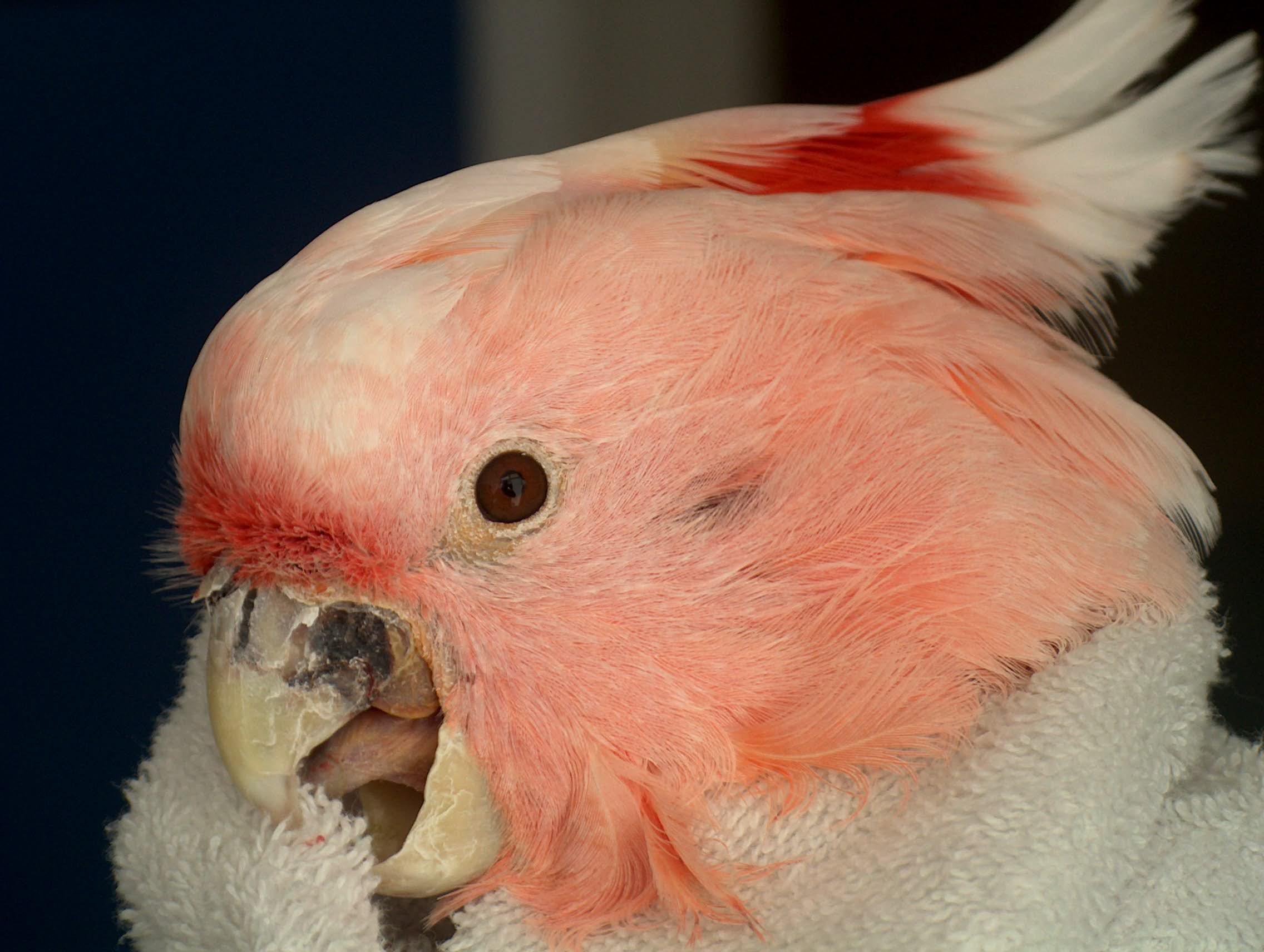
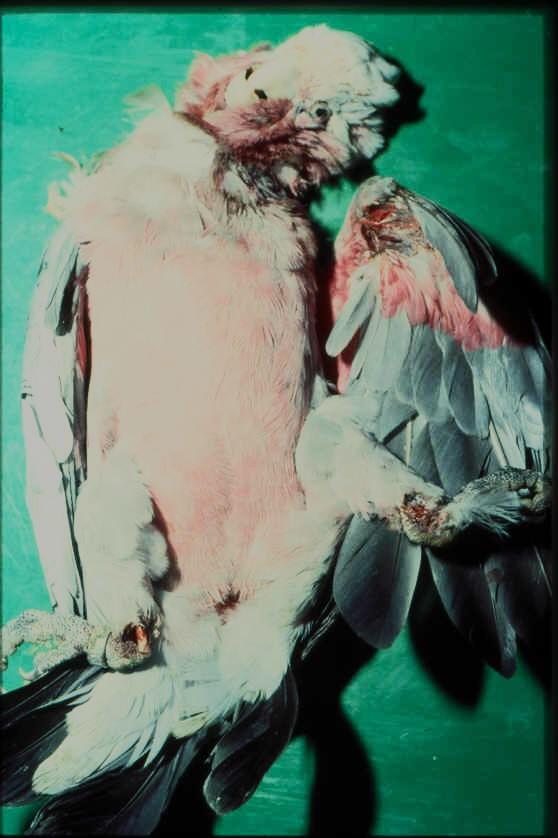
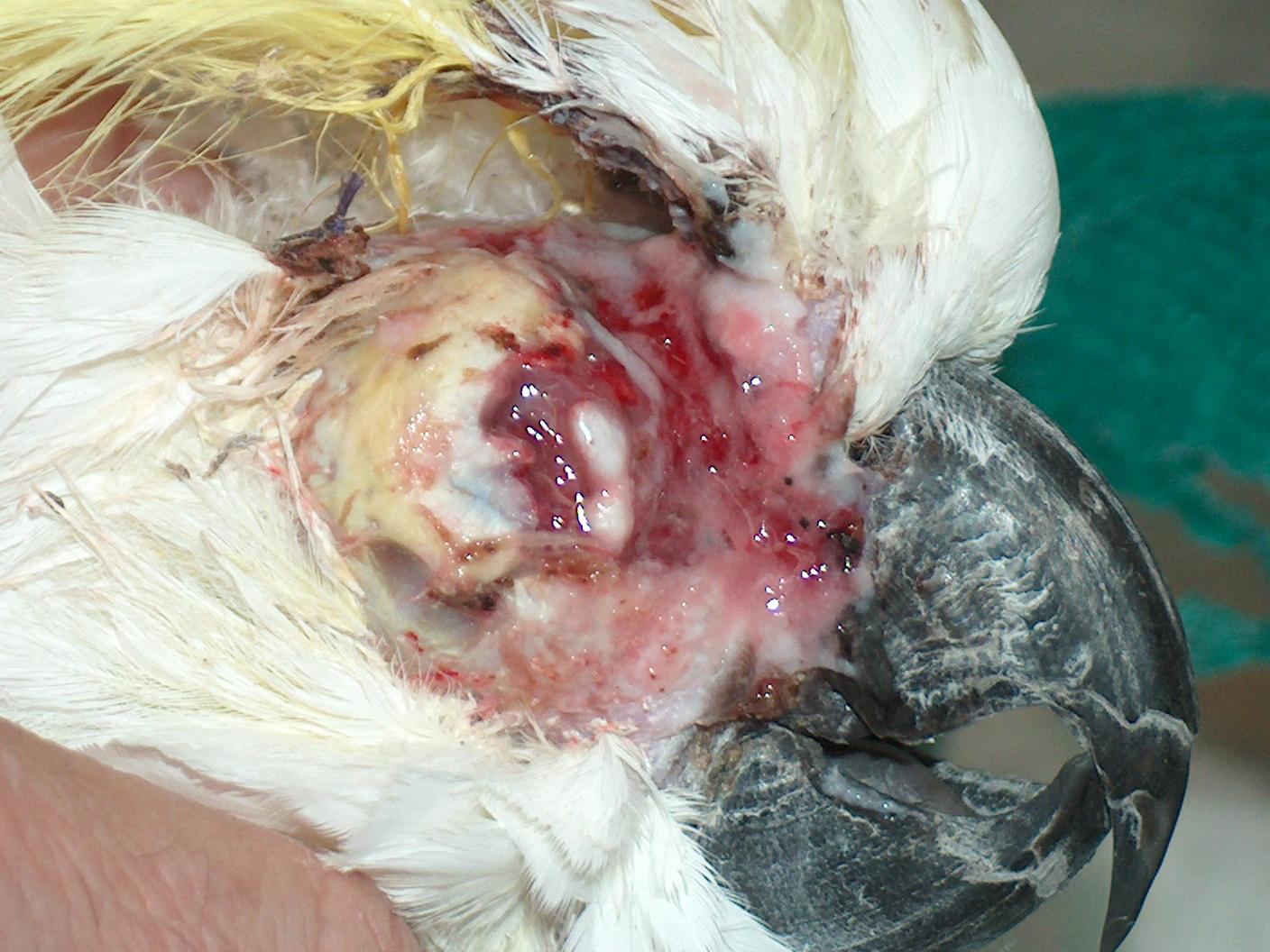
It is a major problem worldwide that male cockatoos exhibit aggressive behavior towards the chrysalis. The results are injuries and even fatal consequences.
Domestic violence in cockatoos part 2
Drs. Jan Hooimeijer DVM RPBC
Advice practice for Birds 2026
It goes without saying that the breeding results due to “domestic violence” Also greatly reduced. During the annual conference of the Association of Avian Veterinarians in 2004 in New Orleans, I gave a presentation on this problem. The reason was the outcome of research that I supervised, conducted by 2 students from the Van Hall Institute in Leeuwarden. Starting points were a number of questions and hypotheses based on knowledge and experience based on ethology. So based on observing behavior, responding to the questions and problems I have been confronted with all these years. Ultimately it turns out that it is mainly about common sense and questioning what is considered normal because everyone does it that way. My knowledge / experience is based on ethology, observing the behavior of birds and responding to questions and problems that I have been confronted with since 1982, which ultimately comes down to “common sense”.
But if you look at zoos, aviculture and pet birds, the interests and welfare of parrots are already structurally neglected on that point alone.
Nutritional deficiencies are an important cause of uncertainty
Also with regard to the choice of partner , where the doll chooses a healthy and vital male to produce healthy offspring. As discussed, my experience is that between 5-10 years the first clear symptoms of feeding errors start to appear. This also means that age-related problems may arise because a cockatoo of 4 years has a much better condition than the same cockatoo of 8 years. It is more than remarkable that until now this aspect has almost never been taken seriously. Within the zoo world , there are very bad experiences when it comes to birds, just like within aviculture, when it comes to health, reproduction and life expectancy. Rarely are these bad experiences linked to nutritional errors. An important reason, as discussed, is that the knowledge and experience gained within avian medicine has not yet been taken seriously within aviculture or within the zoo world. Zoo veterinarians are primarily mammal veterinarians and not bird veterinarians. Breeders and curators work based on their experiences and rarely have a direct link with developments in bird medicine. An important reason is that the curriculum for veterinary medicine students worldwide pays little or no attention to avian medicine and the responsible keeping of birds in captivity.
Lack of privacy
- First of all with regard to conspecifics because cockatoos are extremely territorial during the breeding period. There is always much more aggression within the species than towards non-species. An aspect that is hardly taken into account within aviculture.
- Insufficient privacy within a couple who are almost literally on each other's lips 24/7, partly due to a meager supply of perches instead of a wide variety of branches varying in thickness/diameter and higgledy-piggledy.
- Insufficient privacy in zoos/collections where “open and exposed” birds are watched in a way that makes birds constantly feel watched/intimidated. This may be by visitors, but also to a large extent by the caregivers.
Lack of privacy is an important reason for behavioral and welfare problems in humans and animals. At the same time, a lack of privacy is rarely taken seriously and very little can be found about it in the literature, especially when it comes to birds..
Prey animals
Parrots are the ultimate prey animals. The eyes are placed on the side of the head. Prey animals are insecure by nature. Parrots constantly monitor their surroundings due to the risk of being caught by a bird of prey/predator. In my opinion, it is more than remarkable that it is not recognized that parrots/cockatoos are prey animals and therefore no consequences are attached to this. So also not in the approach by caregivers/public. Humans have the typical features of predators, with eyes placed side by side at the front of the head.
It is therefore underestimated that circulating/flying birds of prey are a source of unrest and stress. This means that part of the top of the aviaries must be shielded in such a way that the birds do not see the wild birds of prey and are therefore not seen and at least have a place where they experience privacy. I have visited breeders because of disappointing breeding results, where I see 2 birds of prey flying above the aviaries within half an hour, knowing that the birds also see them and respond to them without the breeder realizing it. In addition, a range of other factors always played a role that caused uncertainty/stress.
Free choice of partner
Free mate choice is normal in nature where it is common for the female to determine whether a male is accepted as a partner and future father of the offspring. Placing a male and a female together on the basis of the results of the gender survey is therefore obviously an important source of problems. Spacious and well-equipped group aviaries are crucial for achieving partner bonding. When there is talk of partner bonding, a separate spacious aviary is provided to ensure privacy and where the design is such that the birds can exhibit as much normal behavior as possible. The fact that there is still the opportunity to be part of the group during the year is, just like in nature, completely normal. Breeding pairs are not completely isolated in nature and the birds can choose to have social contact.
Lack of exercise
It is, in my opinion, bizarre to see parrots constantly and everywhere sitting on solid, immovable horizontal perches. It always concerns an incorrect diameter where the birds have no other choice. As a bird watcher I have been watching birds in nature for over 55 years and have been fortunate enough to observe parrots in nature. Birds in nature sit in branches and these are rarely horizontal, always have a variable diameter and are almost always flexible. Sitting on a flexible sloping branch means that a large number of muscles are activated to ensure balance. Birds sleep on one leg on sloping branches while the wind blows. Like starlings sleeping in reed beds where the reed is completely vertical and bends due to the weight of the starlings. I have seen hyacinth macaws in the Pantanal (South America) sitting on moving branches the diameter of my thumb. In captivity, these birds are given horizontal, stable, thick tree trunks to perch on. Incorrect perches are a reason for foot problems and joint problems. Every time I talk to a breeder or animal caretaker about this, it turns out that no one has thought about it, resulting in the statement “that's how everyone does it” so it must be good.
Intelligence and cognition underestimated
The results of the long-term research by Dr. Irene Pepperberg on the intelligence and cognitive capacities of parrots have not and still are not used in aviculture, not in zoos, not in breeding stocks and not in parrot sanctuaries. And therefore not when it comes to parrots that are kept as pet birds. Dr. Irene Pepperberg has concluded, based on more than 45 years of research, that we are dealing with an intelligence level that can be compared to children aged 6-7. Parrots have language skills comparable to children aged 2-3 years. Parrots have high-quality cognitive capabilities. This means that parrots experience to a large extent what is going on in the environment. Problems and uncertainty in the environment have a negative effect on the behavior and well-being of parrots.
Between 2014 – 2024 has collaborated with Dr. Irene Pepperberg and, at the invitation of universities and/or study groups of veterinary students, day seminars and workshops have been presented worldwide on behavior, intelligence, cognition and well-being. Preventing behavioral problems, responding to and solving behavioral problems and welfare problems is central.
Not being tame is asking for trouble
Not being tame is one of the most important stress factors. It is the outcome of the fact that the birds do not feel comfortable in the presence of the keepers. Daily care, even just offering water and food, is a constant stress factor if the birds are not tame. Very special because it is very quickly possible to ensure that the birds feel comfortable in our presence. The persistent idea that these are “wild birds” that should not be tame because they are not pet birds is an absurd idea. It is a dogma among breeders and in the zoo world for which there are no scientifically substantiated arguments to date. I am referring to Jane Goodall and her relationship with chimpanzees in nature. Chimpanzees that feel comfortable in Jane Goodall's presence continue to behave completely normal as animals in nature. This is in contrast to the relationship between zookeepers of chimpanzees. Zookeepers make the chimpanzees uncomfortable in their presence. Zookeepers describe chimpanzees as extremely dangerous and unpredictable. It is beyond sad to think that captive chimpanzees, like other captive animals, constantly experience being treated with disrespect. The relationship is based on distrust where the intelligence and cognitive capabilities of animals are not taken seriously. No different from the bad teacher where students start to misbehave because the students do not experience that they are treated with respect by the teacher. It is the primary responsibility of owners, breeders and keepers to ensure the health and welfare of domesticated and non-domesticated animals in captivity. It means that owners, breeders and animal caretakers are responsible for ensuring that the animals feel comfortable in their presence. It is a taboo that I have been facing for many years and it makes me unpopular with breeders and in the zoo world. I consider it my responsibility to break that taboo in the interest of the well-being of non-domesticated animals/birds in captivity. Moreover, it is emphatically in the interest of the well-being of the caretakers, owners and breeders. The outcome is fewer health problems, fewer behavioral problems, fewer welfare problems, better breeding results and a higher life expectancy.
A taboo always involves an uncomfortable truth that forces you to look in the mirror. As an (avian) veterinarian, I consider it my task and responsibility to provide information based on science and my knowledge and experience in the interest of the welfare of animals and in the interest of the well-being of owners/caregivers. Advantages and disadvantages are weighed against each other, arguments that are preferably substantiated on the basis of scientific research. Given a major lack of scientific research on this point, I weigh the advantages and disadvantages on the basis of substantiated professional experience and ethology. The central question is always whether the choices/consequences are in the interests of the birds/animals or not.
Also when it comes to domestic violence in humans, there are major welfare problems. Men who abuse and even kill their (ex) partners (femicide) is an important societal problem. As perpetrators, the men are also victims of circumstances that literally cause them to "get off the path" and start to show serious (unnatural) behavioral problems. My experience and conclusion for many years has been that if parrots, animals, people and children do not experience that they are treated, approached and treated with respect, the outcome is that they will behave disrespectfully. Aggression is one of the manifestations of behavioral and welfare problems. In the wild, there are no reports of male cockatoos injuring or killing their mates. In captivity, these cockatoos are kept under extremely unnatural conditions and the birds do not experience being treated and treated with respect. Uncertainty is an important outcome. Insecurity is the basis of many behavioral problems. Aggression is an example of this. A good nursery teacher or a good teacher at secondary school creates a situation in which the children/pupils experience being treated with respect. It prevents behavioral problems including aggressive behavior. Jane Goodall has shown this for 60 years in dealing with chimpanzees in nature and no one takes it seriously. Jane Goodall has lived peacefully with chimpanzees in nature. Jane Goodall has created a relationship based on mutual respect and trust. Chimpanzees in zoos are constantly described by zookeepers as unpredictable and life-threatening. Animal caretakers do not realize that the aggressive behavior is and is created as a result of serious welfare problems. If a parrot that bites everyone does not bite me, it is because the parrot is experiencing for the first time being treated with respect and trust by someone. It's bizarre that it always turns out to be an uncomfortable truth. Cockatoos in captivity are also victims of this. When it comes to behavioral problems/aggression, all attention is constantly focused on symptom management. The actual cause/diagnosis is ignored. The real cause is that structural mistakes are made in the handling, approach and treatment of cockatoos, parrots, birds, animals and children. My experience is that the serious behavioral problems and welfare problems that are created are almost never addressed, which are an important reason for behavioral problems.
- The findings of the “domestic violence” in cockatoos are partly based on a presentation by Drs. Jan Hooimeijer, during the international conference of the Association of Avian Veterinarians in New Orleans in 2004. The presentation was based on a survey of 20 cockatoo breeders, clients of the Clinic for Birds. The survey was carried out on behalf of the Clinic for Birds by Marleen Langen and Diana Mol as students at the Van Hall Institute in Leeuwarden. It involved 17 questions about the background of the breeder and 93 questions about the individual cockatoos. This involved 61 breeding pairs of cockatoos. 6 pairs of Moluccan cockatoos (Cacatua moluccensis), 2 pairs of White-crested cockatoos (C. alba), 4 pairs of blue-eyed cockatoos (C. ophthalmica), 4 pairs of Lesser yellow-crested cockatoos (C. sulphurea); 6 pairs of Goffini cockatoos (C. goffini);, 3 pairs of Naked-eye cockatoos (C. sanguinea), 1 pair of Long-billed cockatoos (C. tenuirostris), , 28 pairs of Rose cockatoos (galahs, or Eolophus roseicapillus)
- The findings are partly based on my experience as an avian veterinarian, constantly confronted with behavioral and welfare problems.
- The findings are largely based on my experiences and observations as a bird watcher with a keen interest in ethology.
Copyright © Advisory practice for birds | drs. Jan Hooimeijer. No part of this publication may be reproduced or copied without written permission from Jan Hooimeijer. Sharing the article in its original form is of course permitted (and even desirable) on the condition that this is always done with clear source information. The article has been compiled with the greatest care. However, the author cannot accept responsibility for any damage of any kind resulting from defects in the content.