The global commercial wildlife trade affects billions of animals every year and has far-reaching consequences for their welfare.
The commercial wildlife trade involves billions of animals annually, used for a wide range of purposes, including food, fashion, entertainment, traditional medicine, and pets.
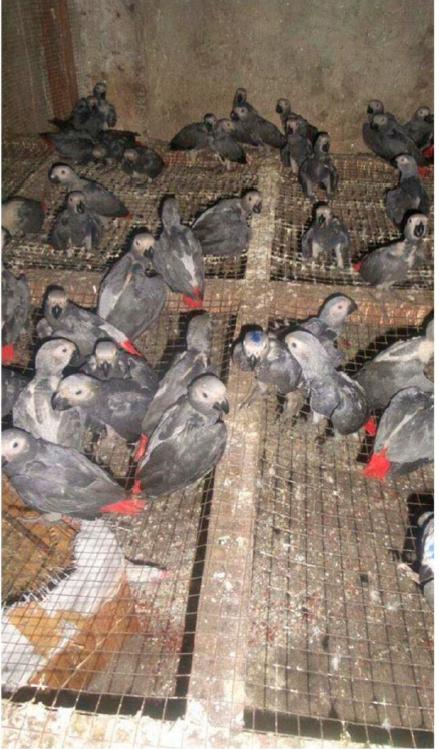
This global industry affects a wide range of species, from mammals like lions to insects like crickets, and often involves serious animal welfare violations. This review presents ten case studies, each highlighting a sector of this trade, including the capture of ball pythons and African grey parrots for the pet industry, the skinning of crocodiles for fashion, and the use of sharks and pangolins for traditional medicine. The findings show that most animals in these trade chains experience long-term negative conditions, such as hunger, thirst, pain, fear, and chronic stress. To mitigate these negative impacts, the authors advocate for a fundamental shift in consumer behavior. This involves reducing and redirecting demand for products that use wild animals and promoting sustainable, humane alternatives.
Would you like to read the full article? Click the link below.
Copyright © Helen Lambert Angie Elwin, Délagnon Assou, Mark Auliya, Lauren A. Harrington, Alice C. Hughes, Aniruddha Mookerjee, Tom Moorhouse, Gohar A. Petrossian, Evan Sun , Clifford arwick, Özgün Emre Can and Neil D’Cruze. Sharing the article in its original form is, of course, permitted (and even encouraged) on the condition that this is always done with a clear reference to the source. This article has been compiled with the greatest care. However, the author cannot accept any liability for any damage of any kind arising from errors in the content.