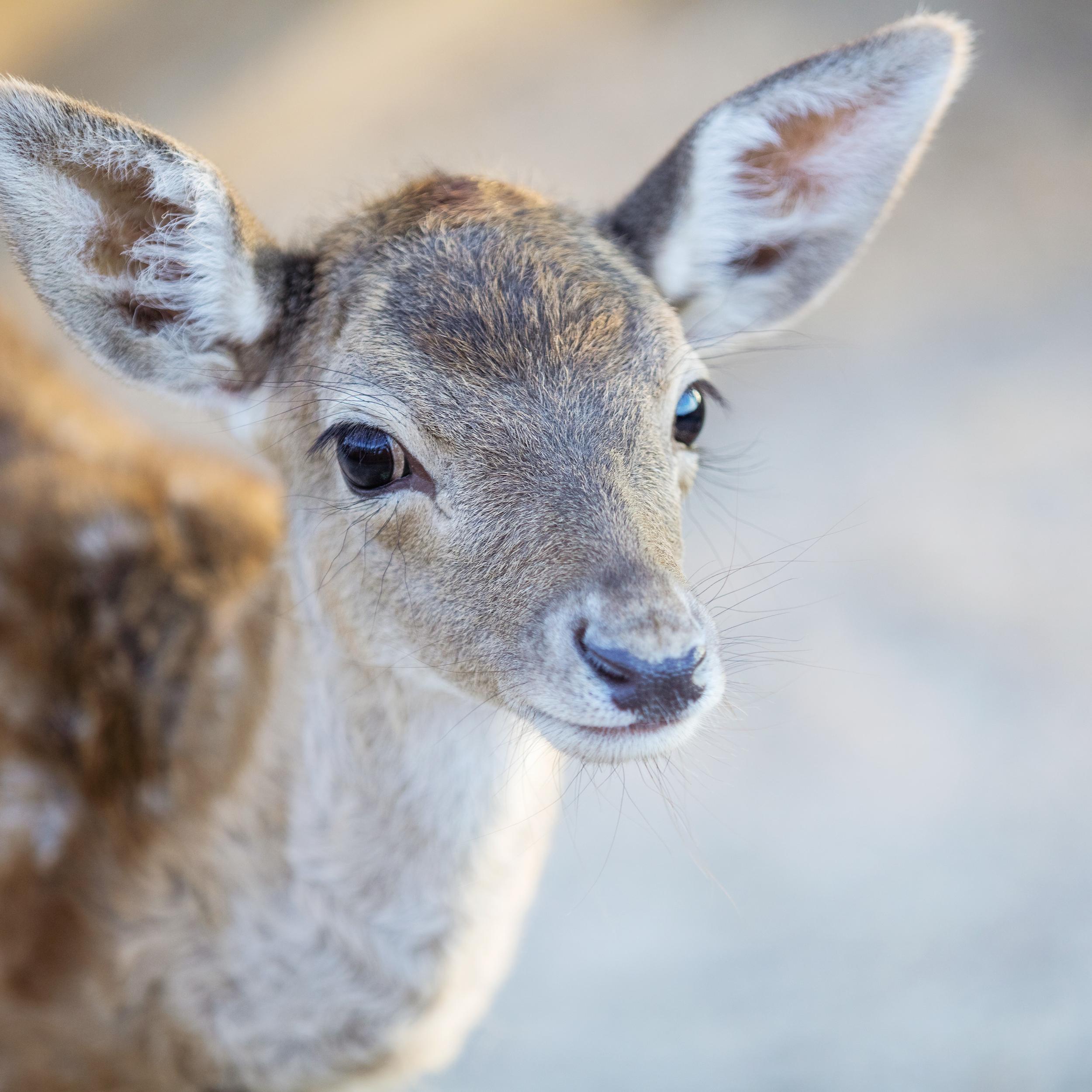
Every day, we are confronted with animals being treated like beasts, and this is especially evident in the way people talk and write about animals.
My first association when people speak of beasts and beastly behaviour is with people who behave inhumanely. This may concern hooligans, homophobes, the Nazis in the Second World War, or the slaughter between the Tutsis and the Hutus.
The words beast and beastly are then associated with violent and cruel behaviour. The Dutch expression ‘it is beyond the wild beasts’ refers to human behaviour regarded as appalling, scandalous and antisocial.
In everyday speech, people talk about scary beasts rather than scary animals to make the description more emphatic and to suggest that fear is naturally associated with beasts, not animals. When people speak of beasts, the associations are with wildness, a lack of civilisation, rudeness, unreliability, unpredictability, cruelty, danger and bloodthirstiness.
As a veterinarian and bird lover, I feel that people who call animals beasts show no respect for animals. I also feel that people who speak of beasts do not understand animals, because they simply lump all animals together as beasts.
I fully realise that the term beasts is usually chosen unconsciously and that people generally have no negative intentions when using it.
At the same time, we speak about the animal kingdom, animal rights, animal welfare and veterinarians. There is even a Party for the Animals. Thanks to icons such as Charles Darwin and Jane Goodall, it has become clear that humans are part of the animal kingdom.
It is therefore a problem when language becomes coarser almost unnoticed and animals suffer as a result, because the word beasts carries so many negative associations. By describing human behaviour as beastly, people repeatedly place humanity outside the animal kingdom—because, after all, we are not beasts.
People tell other people to shut their traps and keep their claws or paws off something. Suddenly, animal characteristics are attributed to humans, but once again only in a negative sense.
Ask someone whether they consider themselves an animal and the obvious answer is yes. This awareness is Jane Goodall’s achievement and was set in motion by her work. Jane Goodall does not refer to chimpanzees as beasts but as animals and, on the basis of decades of research, has confirmed that humans are part of the animal kingdom.
Ask people whether they consider themselves a beast, and the answer will usually be no.
It is therefore remarkable that people who believe they respect animals speak of beasts at every turn. Biologists continually take a dubious lead in this by talking about a beautiful beast. It makes no difference whether they mean a beautiful butterfly, a beautiful bird or a beautiful salamander.
One of the most popular biologists in the Netherlands in the twentieth century is Midas Dekkers. For all his popularity, he has degraded the Dutch language by switching almost immediately to the word beast whenever describing an animal or species. Popular booklets were given titles such as ‘The Flamingo and Other Beasts’, ‘The Frog and Other Beasts’ and ‘The Best Beasts’. Although described as the Netherlands’ most entertaining biology teacher, the legacy of biologists such as Midas Dekkers is that we no longer speak of animals and name their species, but instead describe animals or species as beasts.
If the neighbours’ children are described as beasts, it is clear that we are distancing ourselves from those children. Describing and naming animals as beasts is a degradation of the Dutch language, part of the coarsening of language and, in my view, boorish behaviour. If we no longer speak of an animal and name its species, all animals are lumped together as beasts. This shows the opposite of respect for animals.
When listening to a story or interview about animals after missing the introduction, and the speakers keep referring to beasts, the listener cannot tell whether the subject is animals, a particular species, or people behaving badly. During the excellent broadcasts of the radio programme ‘Vroege Vogels’ (‘Early Birds’), I regularly feel a knot in my stomach when the experts speak of beasts.
It is not merely language that is unfriendly towards animals.
It is also pedagogically inadequate and even destructive, because children grow up believing there is a vast difference between humans and animals, without realising that the word beast is actually an insult. What Jane Goodall set in motion is pushed back a hundred years.
The only exception is commentary during a film or interview about wildebeest, when the subject really is the wildebeest as a species and this species should not be confused with other ‘wild’ animals.
Why not name the species, or at least speak of animals?
Saying that they are beautiful butterflies—or, more specifically, beautiful painted lady butterflies—conveys the message clearly and positively. Saying that they are beautiful beasts is almost a contradiction, because no one associates a butterfly with violence and cruelty; instead, it evokes the feeling of butterflies in one’s stomach.
It would be strange for a poet to write in a love poem: ‘Just thinking of your beautiful brown eyes gives me the feeling of beasts in my stomach.’ You would immediately think of disease-causing and harmful tapeworms or other deadly parasites, never of butterflies. The recipient would not think of a love poem, but of a poetic way to end a toxic relationship.
On Sunday mornings, I very much enjoy listening to my favourite radio programme, ‘Vroege Vogels’ (‘Early Birds’). It would be a strange move if a biologist serving as editor-in-chief changed its name to ‘Vroege Beesten’ (‘Early Beasts’).
Loyal listeners would immediately revolt and consider the change outrageous, because ‘Vroege Vogels’ is associated precisely with respect for animals and respect for the animal kingdom of which humans are a part.
Jan Hooimeijer, veterinarian—not a beast doctor
This column was sent to the editors of ‘Vroege Vogels’ in April 2016. Unfortunately, and ‘of course’, nothing was done with it.
Standing up for the interests, rights and welfare of animals repeatedly meets with resistance.
Copyright © Advisory Practice for Birds | drs. Jan Hooimeijer. No part of this publication may be reproduced or copied without written permission from Jan Hooimeijer. Sharing the article in its original form is of course permitted (and even desirable) on the condition that this is always done with clear source information. The article has been compiled with the utmost care. However, the author cannot accept responsibility for any damage of any kind resulting from defects in the content.