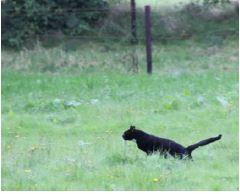
An increasingly common problem: cats hit by cars.
The Hit Cat
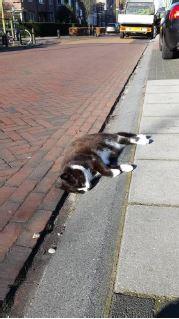
Next to the road, a cat lay against the curb with its paws flailing. Blood was coming from its nose. I stopped on the other side of the road and immediately called the animal ambulance. During the phone call, the cat breathed its last while I was scratching it behind its ear. Witnessing that was an extremely unpleasant experience, where sadness alternated with anger. The cat was picked up by municipal employees, and the description is being passed on to Amivedi so that the owner can find out that the cat was run over. It is clear that this involved a cat that was hit, where the driver of the car drove away. The driver may not have noticed. It is also a punishable offense to drive away in such an accident because the driver is obliged to ensure that care is provided to the injured cat. Incidentally, this also applies to hitting a wild animal such as a rabbit, a roe deer, or a wild duck. It is naturally sad that the cat, as a pet, has to die in this way. It is more than just sad. Being run over in traffic is a common cause of death for cats kept as pets. This is known to veterinarians and it is known to cat owners.
Responsibility
The Animal Welfare Act states:
Article 1.4 General Duty of Care
- Everyone shall exercise sufficient care for animals.
- The care referred to in the first paragraph entails, in any event, that anyone who knows or can reasonably suspect that adverse consequences for animals are caused by their actions or omissions is obliged to refrain from such actions insofar as this can reasonably be required, or to take all measures that can reasonably be required of them in order to prevent those consequences or, insofar as those consequences cannot be prevented, to limit or reverse them as much as possible.
- It is prohibited for animal keepers to withhold the necessary care from these animals.
Therefore, the fact that a cat is run over and killed while kept as a pet is not the fault or responsibility of a motorist. It is solely the fault or responsibility of the cat's owner if it is knowingly and willfully released. There are, therefore, strong arguments to suggest that the owner of the cat run over should receive an official report for neglect and manslaughter. In a large proportion of cases, the owner is and remains unknown. Unlike with dogs, there is no legal obligation to ensure that a transponder is implanted in a cat, which would allow the cat's owner to be traced at all times. The fact that the identity of domestic cats cannot be determined is a major problem. If the cat had not died after the accident and had been taken to a veterinarian by the animal ambulance, the cat would have received all necessary medical care. The cat is admitted to special recovery cages, X-rays are taken, surgery is performed on a broken leg or (internal) bleeding if necessary, the cat receives medication, etc. The owner is unknown and therefore receives no bill. The question is: who has to bear the costs? Naturally, that is the owner of the cat!
The loser
The veterinarian can only hope that there is an arrangement through the municipality or the animal protection organization so that part of the costs are reimbursed. This is not always well organized, meaning veterinarians are more or less the losers because a cat owner has let the cat roam free and is subsequently untraceable. What if the driver of the car is startled by the crossing cat and crashes into a tree, or even worse, hits a cyclist who is subsequently disabled for life or worse? The owner of the cat is fully liable for the damage caused by the cat. The owner of the cat is unknown. Who has to foot the bill? It remains a peculiar situation that cat owners run away from the responsibility legally established regarding the welfare and health of the pet, but also regarding liability for damage. It is very remarkable that cat owners choose to remain untraceable and get away with it when a cat causes damage. Damage and costs for which the cat owner is fully responsible.
The law makes no distinction between dogs and cats regarding the owner's responsibility for the health and well-being of the pet, or regarding liability for damage caused by the pet. It is therefore strangely enough that dogs are required to be identified via a transponder, allowing the owner to be traced, yet this rule does not apply to cats. With cats, it is a daily occurrence that the owner would need to be traced because they roam freely in large numbers, unlike dogs. Everywhere, we consider it normal that there is a ban on letting dogs run loose. This applies in the city, in parks, and naturally in nature reserves. If a dog were to kill a young roe deer in the wild, it would be considered a disgrace and the dog owner would receive a police report.
Dogs
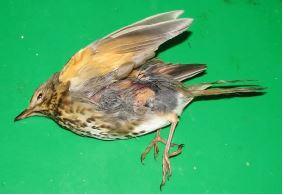
If a cat catches and kills a sparrow, a common whitethroat, or a redwing, the cat's owner is responsible for this, and it would be logical for the owner to receive a police report. After all, these are birds that are legally protected. If the owner were to catch and kill the same bird, or even if the bird were locked in a cage, the owner would also receive a police report. It is forbidden to simply let dogs run loose through a dog flap, where the dog digs holes in someone else's garden or leaves feces in the children's sandbox or rose garden. If dogs start fighting each other at night on the street or in a neighbor's garden, with barking and growling waking up the entire street, there is every reason to call the police so that the owners of the dogs can be traced. Everyone considers this very self-evident, and the same applies to cat owners who call the police if the neighbor's dog chases the cat up a tree or bites it to death.
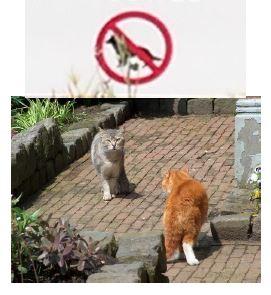
Cat owners subsequently consider it perfectly normal for cats to fight each other at night and cause a nuisance. Veterinarians constantly see cats to treat for bite wounds and abscesses resulting from fights between rival cats in the neighborhood. It is the legal responsibility of the owner to prevent this. The fact that free-roaming cats are also responsible for infectious diseases that can make small children and pregnant women sick is also accepted as a given. In short, cat owners who knowingly let cats roam free under the guise that this is only natural because it is simply a cat are making a major mistake.
According to the law, it is prohibited for several reasons. The most important reason is that cat owners thereby evade the responsibility and duty of care to ensure the health and well-being of the animal. It is therefore more than surprising that it is not prohibited by law to sell, buy, and use cat flaps that allow cats to roam free in the surrounding area and in the wild, cause a nuisance, kill legally protected animals, fight among themselves, and be run over in traffic. One should be able to expect that a pet owner does everything possible to prevent the pet from being run over.
True cat lovers build a large enclosure in the garden so that the cat has the opportunity to go outside, but in a protected environment and on their own property.
Notes on the lamppost
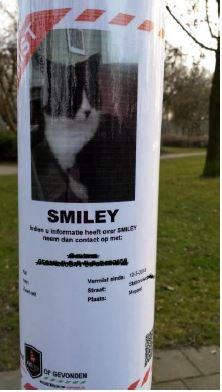
The well-known notes on lampposts, in which cat owners let it be known that they miss their missing cat, are remarkable, to say the least, when we consider that the same owner is responsible for the cat's disappearance and its presumed run-over in traffic. Subsequently, the cat lover acquires a new cat, and the misery starts all over again without having learned from the mistakes made. The issue of "the stray cat" is a remarkable and even bizarre taboo in the Netherlands when it comes to animal welfare and owner responsibility.
Veterinarian
There will always be people who think that this story was written by someone who must dislike cats. I chose to become a veterinarian when I was 8–9 years old. I became a veterinarian to stand up for the interests, health, and well-being of animals. There are no animals I dislike, and certainly not cats. As a veterinarian, I emphatically stand up for the interests and rights of the cat as a companion animal and for the interests and rights of (protected) wild animals in this matter. It is remarkable that organizations such as the Dutch Animal Protection Society ignore the rights and interests of the cat on this point and do not take them seriously. The same can be said of the Party for the Animals. Organizations such as Natuurmonumenten, Staatsbosbeheer, the World Wildlife Fund, and the Dutch Bird Protection Society should be expected to take this issue seriously due to the harmful consequences of free-roaming cats in Dutch nature reserves.
It still appears to be a major taboo to want to put this issue on the agenda. It clearly does not make you popular, not even as an organization that stands up for the interests of nature and protected wild animals. At the same time, it is remarkable that the Dutch Animal Protection Society (De Dierenbescherming) and the Party for the Animals (Partij voor Dieren), through the necessary publicity and marketing, have ensured that the shooting of feral cats in nature reserves is prohibited. Standing up for feral cats apparently does make you popular. The interests of animals in nature that are protected by law, and which also involve endangered species, are swept off the table by the Dutch Animal Protection Society and the Party for the Animals because the interests of feral cats apparently carry more weight. It is clear that this is not about the interests of animals, but about the interests of the Dutch Animal Protection Society and the Party for the Animals, by playing on the many cat owners who are members of the Dutch Animal Protection Society and vote for the Party for the Animals. We must therefore regard the names of the Dutch Animal Protection Society and the Party for the Animals as misleading and voter fraud..
It is remarkable that in discussions, there are always cat owners who suggest that I hate cats. Cat owners who suggest this subsequently have their own cats run over at night. As a veterinarian, I stand up for the interests of the cat by stating that cat flaps should be banned, partly because cats are run over and because cats fight among themselves outside, injuring themselves and others. Every veterinarian and every animal ambulance can attest to this. It is therefore remarkable to me as a veterinarian that veterinarians, the Royal Dutch Veterinary Association, and the Faculty of Veterinary Medicine at Utrecht University do not take a clear stance against cat owners who shirk their responsibility to safeguard the health and well-being of the cat. Apparently, it is not popular, it is a taboo, and the stakes are too high to stand up for the interests of the cat and for the interests of animals that are threatened and killed by the cat.
Cat owners apparently hold a peculiar position of power in the Netherlands and can evade legislation stipulating that an animal owner is responsible for the animal's health and well-being and liable for the damage and nuisance caused by the animal. When cat owners are confronted with their own responsibility, two well-known proverbs apply:
A cornered cat makes strange leaps and Attack is the best defense
When people lack good arguments, the well-known strategy is to go from defensive to offensive, without taking the intentions and arguments seriously and without wanting to engage in discussion.
An old saying that fits a situation where people do not want to hear the truth is:
Don’t shoot the messenger.
Copyright © Adviespraktijk voor Vogels | drs. Jan Hooimeijer. No part of this publication may be reproduced or copied without the written permission of drs. Jan Hooimeijer. Sharing the article in its original form is, of course, permitted (and even encouraged), provided that this is always done with clear source attribution. The article has been compiled with the greatest care. Nevertheless, the author cannot accept responsibility for any damage of any kind arising from defects in the content.