Is it bad that cats in the Netherlands kill millions of birds every year?
The Encounter May 6 09:00
Monique van de Sande
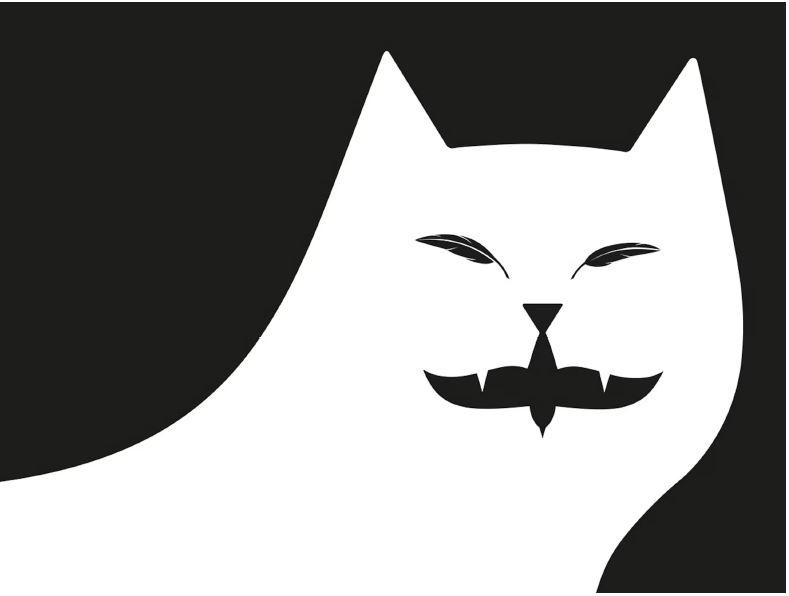
The Netherlands has 3.9 million cats, of which 750,000 are feral. Together, they kill about 20 million birds per year. Is that bad? Veterinarian Jan Hooimeijer thinks so absolutely. Biologist Midas Dekkers thinks not at all.
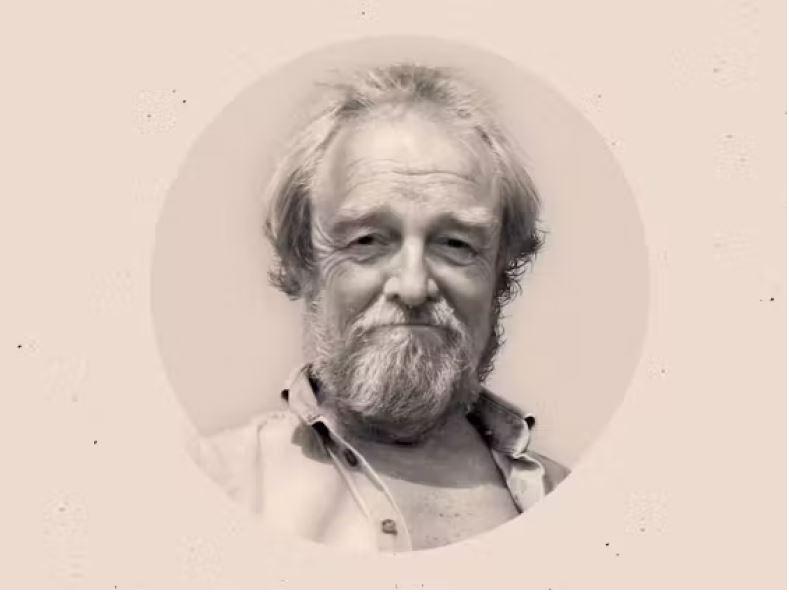
Put a veterinarian and a biologist together and you quickly get an animated conversation about trivial matters and mutual acquaintances in their adjacent fields. At least that is the case with Jan Hooimeijer specializing in birds and their behavior and Midas Dekkers writer, columnist, and notorious cat lover. If you had brought us together for a subject we do agree on Dekkers will exclaim later in the discussion with a playful reproach. Then it would have been fun! But that is not how this column works. With a cup of coffee on one side and a drink on the other we are going to discuss cats that besides being cuddly are also bloodthirsty.
That is simply the nature of the beast Dekkers believes. Anyone with animal welfare in mind should applaud the fact that cats can exhibit natural behavior. We humans sometimes look at this with horror but the truth is that we have no business interfering. Hooimeijer thinks diametrically differently about this: As a veterinarian and based on the Animal Welfare Act which regulates the welfare and health of animals I believe that cats should be taken seriously as companion animals. But instead, they are the victims of owners who abandon them outdoors and don't lose any sleep over the possibility of being hit or killed by a car Fiercely: "That demonstrates a total lack of a sense of responsibility and empathy! Dekkers believes a very bleak picture of cat owners is being painted here. Those I know and let me include myself are distraught when their cat goes missing.
We sometimes look at cat behavior with horror, but we should not interfere.
Midas Dekkers
And no one is doing anything to prevent it Hooimeijer rages. Of all cats only 15 percent carry a chip that allows the owner to be traced. My cat doesn't have a chip either,says Dekkers. Because if you chip all animals later on you won't have any nature left. Nature is precisely that which eludes our power. We are talking about pets here, Hooimeijer retorts. As an owner you are responsible for them. That is also stated in the law which was drafted in the interest of animals. Dekkers cynically: And despite that law more than a million animals are slaughtered in the Netherlands every day. Hooimeijer: That is indeed a sore point, but this discussion is about pets.
And so we return to the responsibility of the cat owner, on which Dekkers likes to place a few caveats. May I keep it personal for a moment? I feel responsible for everything that takes place in my house or yard. But once an animal has ventured into what we call nature, it is part of a different play, and my rules no longer apply. Hooimeijer: We all consider it normal that dogs are not allowed to run loose, especially in nature reserves, because of that same responsibility. So if the neighbor's cat takes a... uh... Dekkers: A Common Whitethroat in my garden? I read in your book that you are quite keen on that. Hooimeijer delighted: Indeed, the Common Whitethroat! If that cat does that, I can hold the neighbor accountable.
Dekkers sarcastic: I also read that you once turned to the police to file a report against the owner of a cat that had gone astray, and were subsequently led away from the station by three burly officers as if you were a not entirely harmless lunatic… Hooimeijer: Yeah, hahaha! So your line of thinking isn’t generally accepted concludes Dekkers. Hooimeijer: Well it is among the people who know what it’s all about, like professors Arie Trouwborst and Chris Smit (who both regularly weigh in on this cat discussion, ed.), and countless scientists with them. When Dekkers remarks that, despite this, no one has ever been ‘thrown in jail’ for cat misconduct, Hooimeijer’s full police story comes out, including the apologies he received from the Chief Commissioner. But yes the Public Prosecution Service dismissed the report. He sighs: So far everyone is in the stranglehold of the cat owners.
Dekkers: But what is so bad about that cat catching a bramblefinch in your garden?
Do you find it sad, or mainly bad for the natural balance? Hooimeijer: I find it bad that we are not taking our responsibility for nature. Dekkers: That cat is nature! Nonsense Hooimeijer snorts. A dachshund is surely nature too? Dekkers snickering: Even in you I still recognize something of nature! Hooimeijer bursts into spontaneous laughter, then makes it clear that it is not about that one common whitethroat, but about those millions of birds per year. The meadow bird population in particular is a cause for concern he states. Although Dekkers thinks very differently about that too. Meadow birds are actually doing really well! Now you hopefully aren't going to talk about the geese? asks Hooimeijer. Dekkers: Certainly I will because there are geese everywhere. Hooimeijer: Which comes at the expense of the lapwing, the curlew, the ruff… Surely the concept of biodiversity hasn't escaped your notice?
By now, one can speak of an invasion. With disastrous consequences for the small predators as well.
Jan Hooimeijer
Dekkers: You surely know too that the species you mention hardly occurred in the Netherlands during the Middle Ages. Meanwhile they are doing poorly due to the current pastures with different grass than before and a mowing policy. But now the geese are eating their fill that the farmers are incredibly jealous. I consider that diversity just as much organic. Hooimeijer sharply: I think very few of your colleagues would agree with that. Dekkers unmoved: You accuse cats of eating or killing birds, but meanwhile, a whole bucket of caterpillars is consumed while raising a nest of great tits. They could all have turned into butterflies. Nonsense! shouts Hooimeijer. Ducks have an average of twelve ducklings annually, and it is just as well that they don't all grow up. Predators ensure a balance in nature.
Dekkers: But why then are you worried about cats? Hooimeijer: Because cats are introduced domesticated predators and because by now you can speak of an invasion. With disastrous effects, also for the small predators in nature. The stoat and the weasel have already disappeared. Hooray for the cats that compensate for the shortage, Dekkers states teasingly. Moreover, most cats catch birds in the garden, and these often come from birdhouses, which we make attractive by constantly scattering food that also ends up on the ground. So, in essence, we are not so much feeding birds as our cats; otherwise, we would be overrun with great tits.
And so you want those cats behind chicken wire?
I’m not saying that at all, Hooimeijer retorts. They are allowed outside but under supervision. Just like dogs and children. In everyone’s interest including that of humans because one in four hundred pregnant women is infected with toxoplasmosis via cat feces. That can lead to miscarriages and babies with congenital defects. When Dekkers suggests that pregnant women might be better off not rummaging through cat droppings, Hooimeijer begins to lose his patience: You are really the kind of cat owner who runs away from their own responsibilities, while cats pose all kinds of dangers, including to road safety. Traffic accidents are caused by motorists, not by cats, Dekkers counters. Let those motorists stay inside at night, and that problem is solved too." When the journalist, out of desperation, offers a bell around the cat's neck as a possible compromise, she is met with scorn.
That has no effect whatsoever, because cats often sit perfectly still before they strike, Hooimeijer explains. Dekkers: So that is something we are in complete agreement about! Afterward the gentlemen continue arguing, with Hooimeijer accusing Dekkers of speciesism, or favoring a favorite animal, to which Dekkers remarks: If only a less ugly word had been invented for that! When Hooimeijer cites the greyhound, which preys on roe deer, accompanied by the dachshund that, when released into the wild, chases badgers out of their burrows as a comparison to the murderous cat Dekkers says dryly: If the last dachshund gives up the ghost tomorrow, you won't see me mourning. Hooimeijer observes speciesism triumphantly, but Dekkers finds that completely unjustified: It is not about a species, but about a breed. I am a racist! Hooimeijer roars with laughter. No matter how great his irritation it is impossible for him to get truly angry at his opponent.
Copyright © Financieel Dagblad | Monique van de Sande. No part of this publication may be reproduced or copied without the written permission of Monique van de Sande. Sharing the article in its original form is, of course, permitted (and even encouraged), provided that this is always done with clear attribution. The article has been compiled with the utmost care. Nevertheless, the author cannot accept responsibility for any damage of any kind arising from defects in the content.